Winning a client relationship is only part of consulting. The work also calls for understanding what the client needs, shaping the right approach, and bringing in the expertise a project requires.
Based in Denver, Colorado, WSI Consultant Larry Barnaby brought years of sales, marketing, and business ownership experience to his consulting practice. His background in working with clients and developing business continues to shape how he approaches digital and AI consulting today.
Today, Larry draws on those strengths while collaborating with consultants who bring different areas of expertise. His experience offers a perspective on how commercial leadership and specialist knowledge work together in WSI's strategy-first consulting model.
A Broader Perspective on Clients and Consulting
Before joining WSI, Larry owned a direct mail business serving clients primarily in the Denver area. He had spent years selling advertising services and building relationships with local businesses.
As demand for direct mail changed, Larry sold the company and began looking at what he wanted to do next.
Larry describes joining WSI as a natural move from one marketing business into another. His experience in sales and client relationships carried forward, but the range of services and people he could work with changed considerably.
His previous business was concentrated around Denver. Today, Larry says his clients are located across more than 20 U.S. states, and he collaborates with WSI consultants in countries including South Africa, Ireland, and Canada.
“I was just truly local. Now I’m worldwide,” he says.
That international connection gives Larry access to perspectives beyond his own market, something he values when discussing client needs and new opportunities.
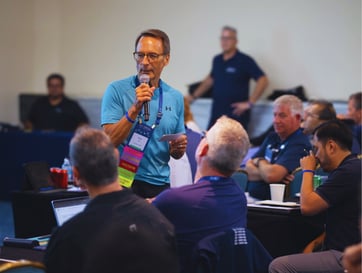
In this interview from WSI's 30 Years, 30 Stories series, Larry discusses the move from local advertising into a much wider consulting network.
Why Client Leadership Is Central to Consulting
Larry came to WSI with experience selling marketing services, managing client relationships, and running a business. Those skills gave him a foundation for the commercial side of consulting.
“Nothing gets done until something is sold,” he says.
Larry sees client leadership and specialist delivery as complementary parts of consulting. His focus is on the commercial relationship, understanding what a business needs, and helping shape the approach. Specialists bring the technical knowledge required for particular services.
That still requires a working understanding of the services being discussed. A consultant needs to ask informed questions, understand the client's objectives, assess recommendations, and remain accountable for the relationship.
Larry's experience illustrates how commercial leadership and technical delivery can operate as complementary responsibilities within a consulting practice.
Drawing on Expertise Beyond Your Own
Even experienced consultants encounter client questions that benefit from another perspective. Having access to people with different backgrounds gives them more knowledge to draw on when evaluating an opportunity or shaping a recommendation.
Larry values that collaboration within WSI. When he's considering a potential client or wants to test an idea, he can reach out to other consultants for their perspective.
“I can call anybody up or send an email to somebody and they will respond,” he says. “They’ll have a meeting with me if I have a question about a potential client, if I want to run some ideas past them.”
Those conversations allow Larry to draw on the knowledge of consultants with different backgrounds. He also recognizes the importance of having the right specialists and partners involved when a project requires technical delivery.
“It’s not a competition among franchisees,” he says. “It really is a family.”
For consultants running their own practices, that collaboration brings additional experience into the conversations they have with clients.
Where Experienced Guidance Fits Into AI Adoption
AI tools are increasingly accessible to businesses, but deciding where to apply them still requires an understanding of business priorities, processes, and constraints.
Larry sees similarities with earlier changes in digital marketing. Businesses have long been able to build their own websites or manage advertising campaigns, yet many continue to seek professional guidance on how to use those tools effectively.
He expects AI to create similar advisory conversations.
“People want to utilize it, they want to reap the benefits from it, but they’re still going to need an expert, a Sherpa, to basically guide them down that path.”
Learning From Those Who've Built Consulting Practices
Business ownership experience provides a strong starting point, but running a consulting practice introduces its own decisions. Client development, service planning, and working with specialist partners all call for continued learning.
Larry's advice to people considering WSI is to take established guidance seriously, even if they've run businesses before. He recognizes the value of learning how other consultants approach the responsibilities of business ownership.
That shared experience is one part of WSI's established consulting model. Consultants retain responsibility for their businesses while having opportunities to learn from people with different professional backgrounds.
Bringing Your Business Experience Into Digital and AI Consulting
Asked to describe WSI in one word, Larry chose “exciting.” He pointed to the organization's history and the opportunities emerging as businesses explore AI.
“We don't even know what all the opportunities are yet,” he says. “In some ways we're starting over again with new opportunities.”
Larry's experience reflects the combination of responsibilities involved in consulting ownership: developing client relationships, leading business conversations, continuing to learn, and working with the right specialists when a project requires them.
If you're exploring consulting ownership, speak with the WSI Franchise Development team to learn how your leadership and commercial experience could fit within its digital and AI consulting model, and what building a practice with WSI involves.